Protéger son cœur passe par l'assiette et certaines associations alimentaires font la différence. Un repas bien pensé peut véritablement devenir un allié contre les maladies cardiovasculaires....
Protéger son cœur passe par l'assiette et certaines associations alimentaires font la différence. Un repas bien pensé peut véritablement devenir un allié contre les maladies cardiovasculaires. Quels sont les nutriments essentiels et comment les combiner intelligemment au quotidien ?
Icy moons circling the outer planets may be far more dynamic—and explosive—than they appear. New research suggests that when heat from tidal forces melts their ice shells from below, the sudden dro...
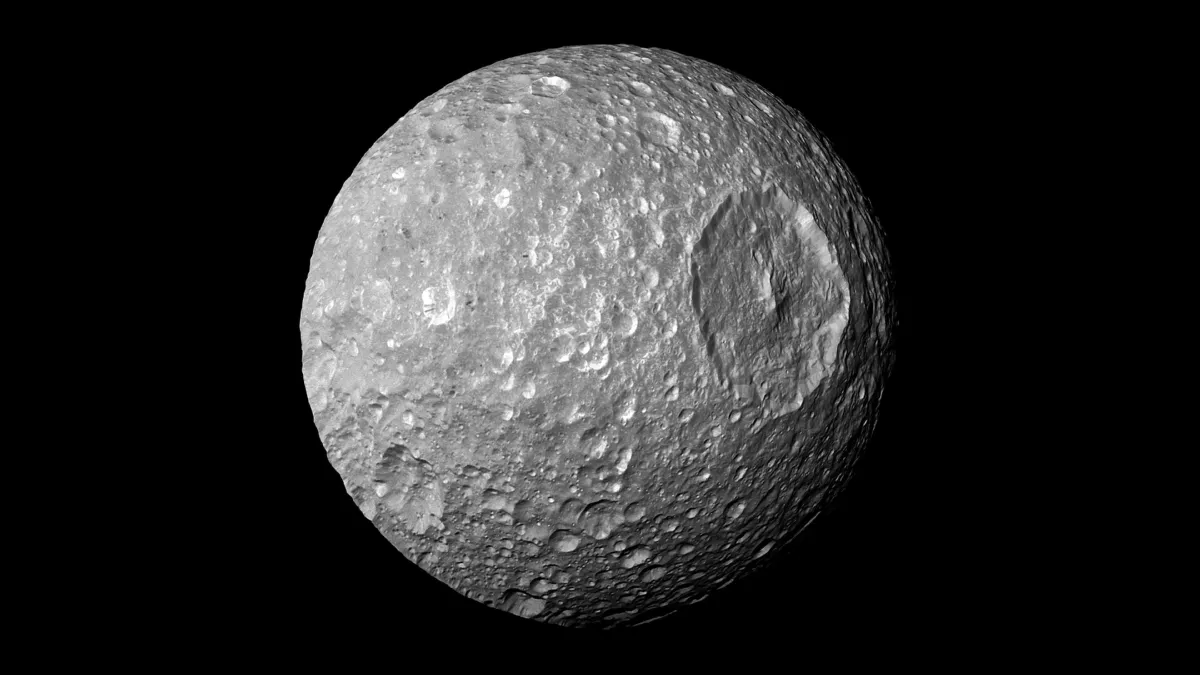
Icy moons circling the outer planets may be far more dynamic—and explosive—than they appear. New research suggests that when heat from tidal forces melts their ice shells from below, the sudden drop in pressure could cause hidden oceans to boil beneath the surface. On smaller moons like Enceladus, Mimas, and Miranda, this process may help explain strange features such as Enceladus’ tiger stripes and Miranda’s towering cliffs.
Twisting atomically thin magnetic layers does more than reshape their electronics—it can create giant, topological magnetic textures. In chromium triiodide, researchers observed skyrmion-like patte...
Twisting atomically thin magnetic layers does more than reshape their electronics—it can create giant, topological magnetic textures. In chromium triiodide, researchers observed skyrmion-like patterns stretching far beyond the expected moiré scale, reaching hundreds of nanometers. Even more surprising, their size doesn’t simply follow the twist pattern but peaks at a specific angle. This twist-controlled magnetism could pave the way for low-power spintronic devices built from geometry alone.
Topics:
magnetic skyrmions
chromium triiodide
topology
twist control
nanomagnetics
Mooraboolomyces wintlei C.P. Hull, A.S. Urquhart & A. Idnurm, in Hull, Urquhart et Idnurm. 2024. DOI: doi.org/10.11646/phytotaxa.644.1....
Mooraboolomyces wintlei C.P. Hull, A.S. Urquhart & A. Idnurm, in Hull, Urquhart et Idnurm. 2024. DOI: doi.org/10.11646/phytotaxa.644.1.5 Researchgate.net/publication/379691732AbstractA new genus and species in the Mucoromycota, Mooraboolomyces wintlei, was isolated into culture from leaf litter from a national park in Victoria, Australia, and is described. The strain reproduced asexually to form sporangia and sporangiospores, with no production of zygospores, and sequencing of its genome and analysis supported a heterothallic mode of reproduction. Phylogenetic analyses using five DNA regions placed the strain within the Mucorales and Mucoraceae, clearly distinct from previously described genera. This represents the second genus in this phylum that has been identified from Australia and that is currently unique to this country.biodiversity, heterothallism, Mucorales, sex locus, zygomycete, Fungi Physical properties of Mooraboolomyces wintlei.A. Photograph of the location from where the species was obtained. B. Petri dish plates (9 cm diameter) from above (top) or below (bottom) after 13 days at 23 °C on PDA. C. Edge of growing culture with the fungus illuminated to show examples of sporangia and spores extending beyond the starting culture to initiate new growth to account for the images in B. D. Two sporangia. E. Scanning electron microscopy of the spores in a sporangium. F. Columella, featuring the dark structure at its base. G. Asexual spores. Scale bars: C = 1 cm, D = 40 µm, E = 6 µm, F, G = 10 µm.CAITLIN P. Hull, ANDREW S. Urquhart and ALEXANDER Idnurm. 2024. Mooraboolomyces wintlei gen. & sp. nov. from Victoria, Australia. Phytotaxa. 644(1); 35-41. DOI: doi.org/10.11646/phytotaxa.644.1.5 [2024-04-09] Researchgate.net/publication/379691732_Mooraboolomyces_wintlei_gen_sp_nov_from_Victoria_Australia