Much like humans, microbial organisms can be fickle in their productivity. One moment they're cranking out useful chemicals in vast fermentation tanks, metabolizing feed to make products from pharm...
Much like humans, microbial organisms can be fickle in their productivity. One moment they're cranking out useful chemicals in vast fermentation tanks, metabolizing feed to make products from pharmaceuticals and supplements to biodegradable plastics or fuels, and the next, they inexplicably go on strike.
Deep beneath the surface of distant exoplanets known as super-Earths, oceans of molten rock may be doing something extraordinary: powering magnetic fields strong enough to shield entire planets fro...
Deep beneath the surface of distant exoplanets known as super-Earths, oceans of molten rock may be doing something extraordinary: powering magnetic fields strong enough to shield entire planets from dangerous cosmic radiation and other harmful high-energy particles.
Topics:
astrobiology
exoplanets
rocky
oceans
magma
hidden
science
Pregnant women exposed to disease-causing 'forever chemicals' could be at a greater risk of developing a major pregnancy complication that has been on the rise for the past decade.
Topics:
pregnancy
cancer
chemicals
forever
toxic
science
Wormholes are often imagined as tunnels through space or time—shortcuts across the universe. But this image rests on a misunderstanding of work by physicists Albert Einstein and Nathan Rosen.
Topics:
general physics
finance
technology
universe
time
wormholes
science
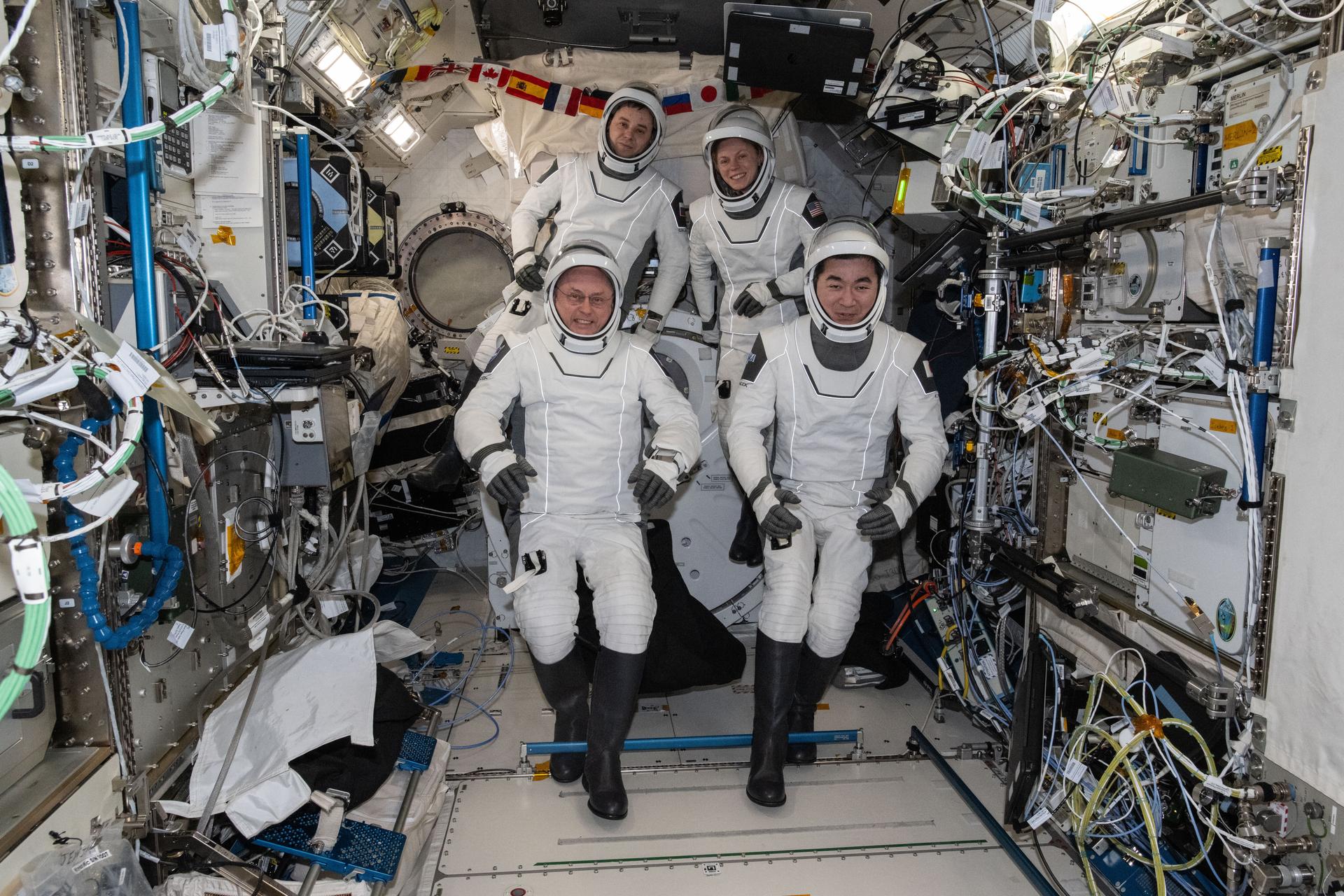
NASA’s SpaceX Crew-11 mission with agency astronauts Zena Cardman and Mike Fincke, JAXA (Japan Aerospace Exploration Agency) astronaut Kimiya Yui, and Roscosmos cosmonaut Oleg Platonov returned to ...
NASA’s SpaceX Crew-11 mission with agency astronauts Zena Cardman and Mike Fincke, JAXA (Japan Aerospace Exploration Agency) astronaut Kimiya Yui, and Roscosmos cosmonaut Oleg Platonov returned to Earth after a long-duration mission aboard the International Space Station. During their stay, Cardman, Fincke, and Yui contributed more than 850 hours of research to help prepare humanity […]
Topics:
international space station (iss)
humans in space
human research program
iss research
science
A newly-described partial skeleton from the Koobi Fora Formation in northern Kenya is giving paleoanthropologists their most complete picture yet of Homo habilis -- one of the earliest members of ...
A newly-described partial skeleton from the Koobi Fora Formation in northern Kenya is giving paleoanthropologists their most complete picture yet of Homo habilis -- one of the earliest members of the human genus -- revealing just how physically distinct it was from later Homo species.
The post 2-Million-Year-Old Skeleton Offers Clearest Look Yet at Homo habilis appeared first on Sci.News: Breaking Science News.
Topics:
paleoanthropology
human
anthropology
featured
africa
fossil
hand
hominin
homo
homo habilis
Deep-sea sediment layers show rare microbial wrinkle structures that formed in environments far beyond the reach of sunlight. Dr. Rowan Martindale, a paleoecologist and geobiologist at the Universi...
Deep-sea sediment layers show rare microbial wrinkle structures that formed in environments far beyond the reach of sunlight. Dr. Rowan Martindale, a paleoecologist and geobiologist at the University of Texas at Austin, was hiking through Morocco’s Dadès Valley in the Central High Atlas Mountains when an unusual detail in the rocks made her stop. She [...]
Topics:
paleontology
geology
geological society of america
fossils
earth science
biology
science