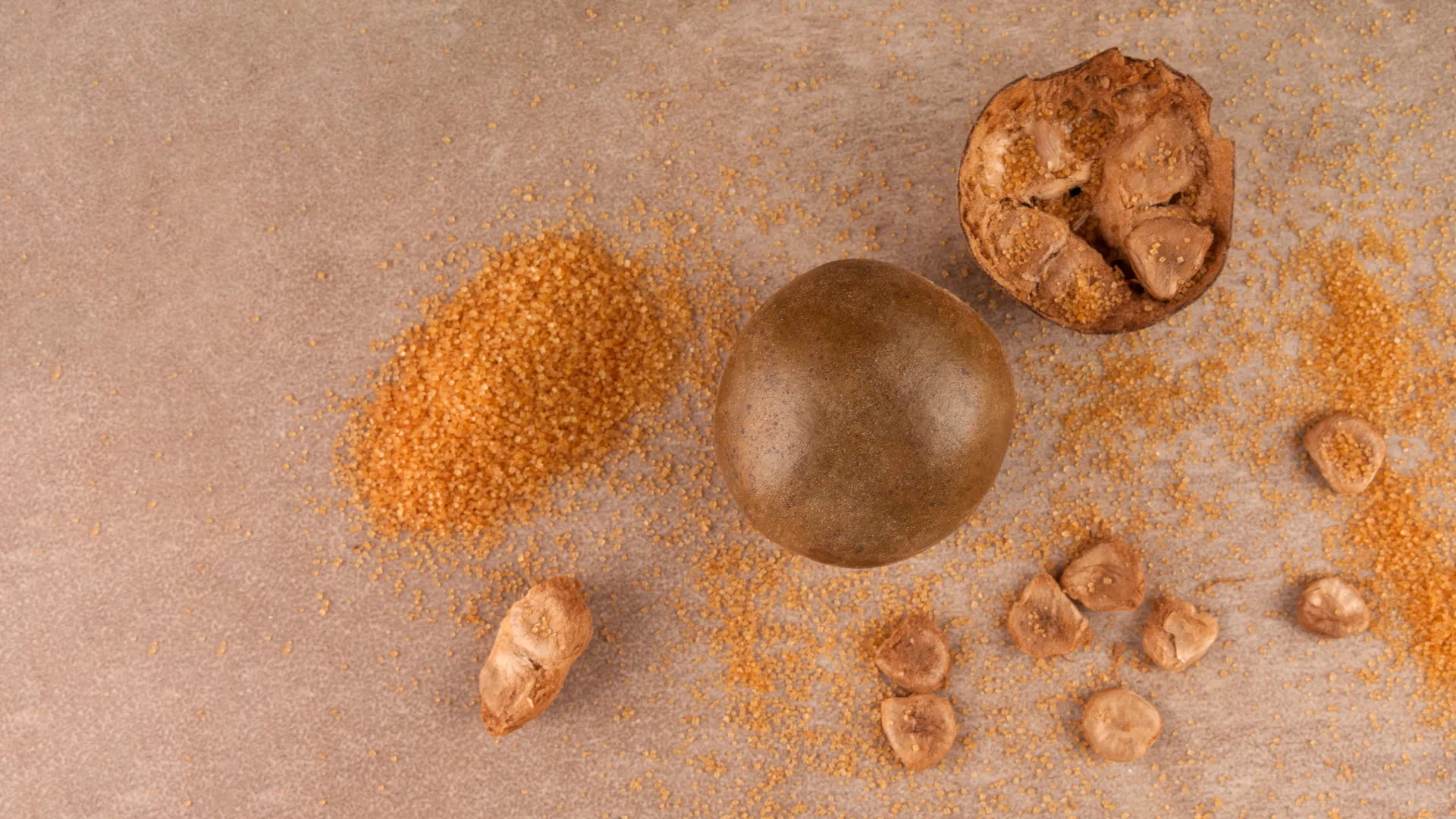
Scientists are taking a closer look at monk fruit and discovering it’s more than just a sugar substitute. New research shows its peel and pulp contain a rich mix of antioxidants and bioactive compo...
Scientists are taking a closer look at monk fruit and discovering it’s more than just a sugar substitute. New research shows its peel and pulp contain a rich mix of antioxidants and bioactive compounds that may support health. Different varieties offer different chemical profiles, hinting at unique benefits. The work could shape how monk fruit is used in future foods and supplements.
Topics:
science
bioactive compounds
antioxidants
monk fruit
health
En hiver, les épisodes neigeux ne sont pas rares. Lorsque les flocons s’invitent dans les jardins, sur les trottoirs et tout autour des habitations, comment déneiger pour sécuriser les accès. La ne...
En hiver, les épisodes neigeux ne sont pas rares. Lorsque les flocons s’invitent dans les jardins, sur les trottoirs et tout autour des habitations, comment déneiger pour sécuriser les accès. La neige s’accumulant, comment faire pour déneiger efficacement les jardins, balcons et terrasses ?
Topics:
neige
jardin
saison hivernale
hiver
sel de sel
selon
sel
science
Les attaques informatiques visant les entreprises françaises ne cessent d’augmenter, touchant désormais aussi bien les grandes organisations que les PME ou les collectivités. La question n’est aujo...
Les attaques informatiques visant les entreprises françaises ne cessent d’augmenter, touchant désormais aussi bien les grandes organisations que les PME ou les collectivités. La question n’est aujourd’hui plus seulement de déployer des solutions de sécurité informatique, mais de savoir si ces...
Topics:
cybersécurité
informatique
sécurité
numérique
cyberattaque
services aux entreprises
protection des données
entreprises françaises
pme
gestion de l'entreprise
As Michael Carrick prepares for his spell as interim manager of Manchester United, a former coach of the club has offered his services to the ex-midfielder.
Topics:
football
manchester
manchester united
interim manager
michael carrick
man united
coach
Puya vallis-colcaensis Treviño & Gouda,in Treviño-Zevallos, Gouda, Quipuscoa et Bravo, 2025. DOI: doi.org/10.11646/phytotaxa.683.1.8 Resear...
Puya vallis-colcaensis Treviño & Gouda,in Treviño-Zevallos, Gouda, Quipuscoa et Bravo, 2025. DOI: doi.org/10.11646/phytotaxa.683.1.8 Researchgate.net/publication/388487988AbstractA new Puya species, Puya vallis-colcaensis (Bromeliaceae, Puyopsis), that inhabits the high Andean region of Arequipa in southern Peru, is described and illustrated. This species has greenish-black petals, a compound inflorescence with branches measuring 11–15 cm long, floral bracts that turn dark when dry, and sepals with dense stellate trichomes, carinate toward the apex. This species was locally mistaken for the similar P. weberbaueri, but a comparative and detailed analysis of its morphology reveals that it should be considered a new taxon. Puyopsis, Colca canyon, mountain range, endemism, valley, Monocots Puya vallis-colcaensis.A. Habit; B. Branch of inflorescence and primary bract; C. petal; D. Sepals, on the left abaxial and adaxial view on the right; E. Flower and floral bract; F. Flower base and reproductive organs; G. Transverse section of the ovary; H. Fruit after dehiscence; I. View distal part of the peduncle; J. View of basal part of the peduncle.Photos by Italo Treviño. Puya vallis-colcaensis. A. Habitat in Colca Canyon, Arequipa, B. Plant in habitat with a Condor in the background, circling around, C. Hummingbird visiting the flowers.Photos by Italo Treviño (A, C), J.M. Wu (B).Puya vallis-colcaensis Treviño & Gouda, sp. nov.Etymology:—The specific epithet refers to the Colca Canyon, one of the deepest canyons in the world. In this placethis species reaches large numbers and is well distributed, being one of the characteristic species of this territory. Italo F. TREVIÑO-ZEVALLOS, Eric J. GOUDA, Victor QUIPUSCOA and Cinthia BRAVO. 2025. Puya vallis-colcaensis (Bromeliaceae) A New Species from the Peruvian Andes. Phytotaxa. 683(1); 72-78. DOI: doi.org/10.11646/phytotaxa.683.1.8 [2025-01-29] Researchgate.net/publication/388487988_Puya_vallis-colcaensis_a_new_species_from_the_Peruvian_Andes
Topics:
toponym
taxonomy
south america
phytotaxa
peru
neotropical botany
neotropical
montane
monocots
bromeliaceae
There is a fundamental tension in space exploration that has created ongoing debates for decades. By creating the infrastructure we need to explore other worlds, we damage them in some way, making ...
There is a fundamental tension in space exploration that has created ongoing debates for decades. By creating the infrastructure we need to explore other worlds, we damage them in some way, making them either less scientifically interesting or less “pristine,” which some would argue, in itself, is a bad thing. A new paper available in JGR Planets, from Francisca Paiva, a physicist at Instituto Superior Técnico, and Silvio Sinibaldi, the European Space Agency’s (ESA’s) planetary protection officer, argues that, in the Moon’s case at least, the problem is even worse than we originally thought.
Simojoflorum mijangosii Hernández-Damián, Rubalcava-Knoth, Gómez-Acevedo, Cruz-Durán & Cevallos-Ferriz, in Hernández-Damián, Knoth, Gómez-Acevedo, Cruz-Durán et Ceval...
Simojoflorum mijangosii Hernández-Damián, Rubalcava-Knoth, Gómez-Acevedo, Cruz-Durán & Cevallos-Ferriz, in Hernández-Damián, Knoth, Gómez-Acevedo, Cruz-Durán et Cevallos-Ferriz, 2026. DOI: doi.org/10.1080/08912963.2025.2604147Drawings by Aldo Domínguez de la Torre. ABSTRACTAn inflorescence preserved in amber from the middle-early Miocene from southern Mexico is identified as a new extinct member of Fabaceae. We described and identified the fossil material, comparing it with extant and fossil members of the Fabaceae using light microscopy and computed microtomography. The fossil inflorescence has morphological characters that allow a near comparison with Caesalpinioideae (Fabaceae), including flowers aggregated in a capitate inflorescence. Even more, bisexual and staminate flowers, valvate aestivation, many stamens, a superior, unilocular ovary with marginal placentation are characters that allow their comparison with the tribe Mimoseae, especially the polycarpellate gynoecium is comparable to the Acacieae and Ingeae tribes in the traditional classification. However, other floral characteristics, such as anther glands, partially united filaments, a basal nectariferous disk, and a stalk ovary, are comparable to Mariosousa Seigler & Ebinger, 2006, Senegalia Raf., 1838, and Parasenegalia Seigler & Ebinger, 2017. The phylogenetic relationship between them is unresolved, and information on the floral structure is limited for further comparison. Thus, we support the identification of Simojoflorum mijangosii gen. et sp. nov. as a new extinct member of the tribe Mimoseae that suggests the diversification of the lineage during the Miocene.KEYWORDS: Fossil inflorescence, Fabaceae, Mimoseae, Miocene, polycarpellateSimojoflorum mijangosii gen. et sp. nov. from Simojovel de Allende, Chiapas, Mexico. (A) Overall view showing the spherical capitate inflorescence, scale bar: 1.0 mm. (B), Lateral view of spherical inflorescence, scale: 1.0 mm. (C) Detail of staminate and bisexual flowers arranged in the spherical capitate inflorescence, inferior left arrow indicates staminate flower, superior left arrow indicates the differentiated perianth, and right arrow indicates a bisexual flower with a large style, scale: 1.0 mm. (D) Detail of sessile flowers with differentiate perianth, right arrow indicates sepal and left arrow to indicate petal, scale: 0.5 mm. (E) Detail of anthers, right arrow indicates dorsifixed anthers, and left arrow indicates glandular appendage, scale: 0.2 mm. (F) Detail of stigma and style, scale: 0.5 mm.Family: Fabaceae Lindley, Citation1836Subfamily Caesalpinioideae De Candolle, Citation1825Tribe: Mimoseae sensu Queiroz et al. Citation2024Genus: Simojoflorum Hernández-Damián, Rubalcava-Knoth, Gómez-Acevedo, Cruz-Durán et Cevallos-Ferriz gen. nov.Etymology: The epithet Simojo refers to Simojovel de Allende, the locality from which the fossil was collected, and florum, of Latin meaning flowers.Generic diagnosis: Inflorescence capitate and spherical with staminate and bisexual flowers. Staminate flowers sessile with pentamerous and differentiate perianth, actinomorphic; calyx and corolla with valvate aestivation, androecium with more than 30 stamens slightly fused at the base with stalked glands. Bisexual flowers with a basal nectariferous disk; central carpel stipitate, ovary superior, unilocular with ca. twenty ovules in two rows, and marginal placentation along a ventral suture. Some bisexual flowers present 4–5 peripheral carpels that surround the central carpel, these carpels are poorly differen and smaller than the central one. Simojoflorum mijangosii Hernández-Damián, Rubalcava-Knoth, Gómez-Acevedo, Cruz-Durán et Cevallos-Ferriz sp. nov.Etymology: The epithet mijangosii refers to Luis Alonso Zuñiga Mijangos who contributed to the study of Mexican amber through the Museo del ámbar, Lilia Mijangos. Holotype: MALM-00111 (Museo del Ámbar, Lilia Mijangos) Locality: Simojovel de Allende, Chiapas, MexicoStratigraphic horizon: La Quinta Formation, middle-early MioceneArtistic reconstruction of inflorescence, flowers, and hypothetical whole plant of Simojoflorum mijangosii gen. et sp. nov. in the Mexican amber.(A) Spherical capitate inflorescence of Simojoflorum mijangosii, scale=1.0 mm. (B) Details of staminate flower, scale = 0.25 mm. (C) Details of anther glands, scale=0.05 mm. (D) Details of monocarpellate bisexual flower, scale = 0.25 mm; (E) Details of polycarpellate bisexual flower, scale = 0.25 mm. (F) Hypothetical Simojoflorum mijangosii small tree, scale = 2.0 m. Drawings by Aldo Domínguez de la Torre. Ana L. Hernández-Damián, Marco A. Rubalcava Knoth,Sandra L. Gómez- Acevedo, Ramiro Cruz-Durán and Sergio R. S. Cevallos-Ferriz. 2026. Simojoflorum mijangosii gen. et sp. nov. preserved in the Mexican Amber unravels the polycarpellate condition in the tribe Mimoseae (Caesalpinioideae, Fabaceae). Historical Biology: An International Journal of Paleobiology. DOI: doi.org/10.1080/08912963.2025.2604147 [13 Jan 2026]
Topics:
'open access'
2026
amber
angiosperm
central america
extinct
fabaceae
journal: historical biology
leguminosae
mexico
Yeneen houssayi Filippi, Bellardini, Carballido, Méndez & Garrido, 2026DOI: doi.org/10.1080/08912963.2025.2584707 Illustration: Gabriel LíoABSTRACTThe fossil record of titanosaur...
Yeneen houssayi Filippi, Bellardini, Carballido, Méndez & Garrido, 2026DOI: doi.org/10.1080/08912963.2025.2584707 Illustration: Gabriel LíoABSTRACTThe fossil record of titanosaur sauropods for the Upper Cretaceous of the Neuquén Basin is remarkably extensive. However, for the Bajo de la Carpa Formation (Santonian) only five nominate species are recorded (Rinconsaurus caudamirus, Bonitasaura salgadoi, Traukutitan eocaudata, Overosaurus paradasorum, and Inawentu oslatus), the latter two coming from the Cerro Overo-La Invernada (CO-LI) area. Here we present a new titanosaur sauropod from La Invernada, Yeneen houssayi gen. et sp. nov. (MAU-Pv-LI-538). The new species is characterised by a series of distinctive features in dorsal, sacral and caudal vertebrae. Phylogenetic analysis indicates that Yeneen is closely related to Narambuenatitan and Overosaurus, as a basal member of an unnominated clade (called ‘Clade A’) of derived non-lithostrotian saltasauroids. The evidence provided by the Cerro Overo – La Invernada sauropod titanosaur fauna suggests that, during the Santonian, species diversity was relatively high and that at least two lineages coexisted: Collossosauria and Saltasauroidea. This finding makes the CO-LI area the one with the greatest diversity of titanosaurs for the Santonian of the Neuquén basin (as it is also for abelisaurid theropods), which makes it an exceptional area to understand the evolution of dinosaur faunas for this period.KEYWORDS: Titanosauria, diversity, upper Cretaceous, Neuquen Basin, GondwanaSystematic PaleontologyDinosauria Owen, 1842Saurischia Seeley, 1888Sauropoda Marsh, 1878Titanosauriformes Salgado, Coria and Calvo, Citation1997Somphospondyli Wilson and Sereno, 1998Titanosauria Bonaparte and Coria, Citation1993Yeneen houssayi gen. et sp. nov.Derivation name: Yeneen, is known in the Tehuelche (Aonikenk) Culture as a spirit or entity related to winter, cold and winter nature in general, alluding to the La Invernada, a Spanish word that refers to the site where the cattle spend the winter. The specific epithet, houssayi, is in honour of Dr. Bernardo Alberto Houssay, Nobel Laureate in Medicine and member of the commission that promoted the creation of CONICET (Consejo Nacional de Investigaciones Científicas y Técnicas, Argentina).L. S. Filippi, F. Bellardini, J. l. Carballido, A. H. Méndez and A. C. Garrido. 2026. Yeneen houssayi gen. et sp. nov. and An overview of the Sauropod titanosaurian Diversity from Cerro Overo – La Invernada area (Bajo de la Carpa Formation, Santonian), North Patagonia, Argentina. Historical Biology: An International Journal of Paleobiology. DOI: doi.org/10.1080/08912963.2025.2584707 [12 Jan 2026]
Topics:
titanosauriformes
titanosauria
taxonomy
south america
sauropod
saurischia
phylogenetics
patronym
patagonia
paleontology - palaeontology